
Film education has always faced a practical problem: the real production workflow is difficult to reproduce in the classroom. Students may study directing, cinematography, lighting, editing, visual effects, and game engines as separate subjects, but professional production requires those disciplines to work together. Led wall virtual production gives schools and training centers a way to connect them. A student can see how a virtual scene affects lighting, how a camera move changes perspective, how actors respond to visible environments, and how technical decisions influence the final image.
Compared with a green screen studio, an LED wall lab is more immediate. Actors are not performing in front of a blank color. They can see the street, desert, spacecraft, showroom, or fantasy landscape around them. Cinematography students can judge framing and lens compression in context. Lighting students can study how the wall contributes interactive color. Directors can make decisions based on an image that looks closer to the final shot. This feedback loop is especially valuable for beginners because it turns abstract post-production concepts into visible on-set choices.
The educational value goes beyond screen operation. A strong lab can teach real-time content creation, camera tracking, color management, LED calibration, production safety, data workflow, and interdisciplinary teamwork. Students can learn why a scene that looks good on a monitor may not work on a wall. They can see how pixel pitch, camera distance, shutter settings, and lighting intensity influence the final result. They can also practice communication between departments, which is one of the most important skills in professional production.
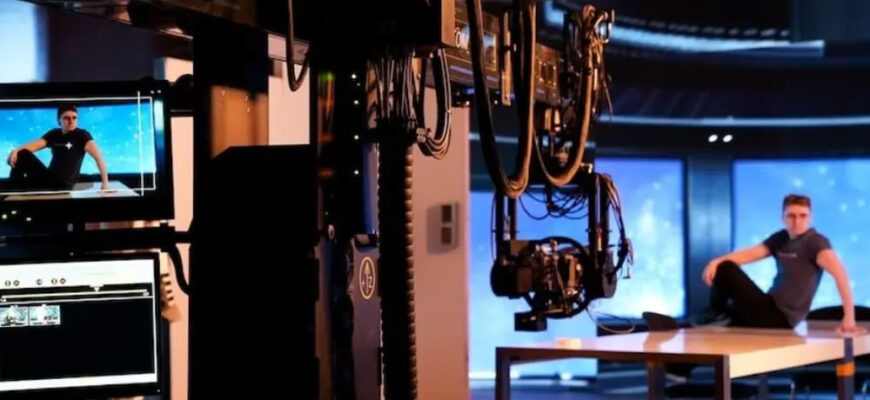
The AIE Virtual Production Studio provides a useful example of this type of training environment. The case emphasizes a space designed for virtual production education, with LED display technology, rendering engine compatibility, and flexible immersive teaching applications. For schools, this is important because the lab must support repeated use by many students, not only a single showcase project.
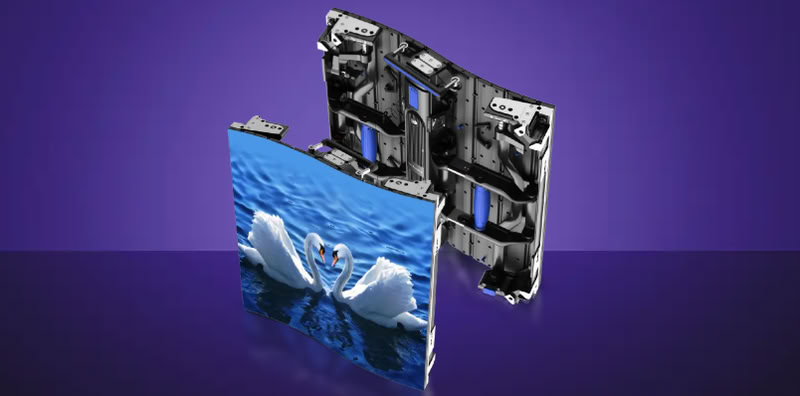
Flexibility is a major requirement. One class may need a flat background for dialogue scenes. Another may want a curved wall for immersive environments. A livestream class may need stable presenter backgrounds. A virtual art department class may need to test different scene files. A product such as the E-Swan indoor curved rental LED display can support curved and creative indoor layouts, helping students understand that an LED volume can be designed as a spatial tool rather than a single flat screen.
Institutions should also plan the curriculum before ordering hardware. A virtual production lab works best when it is tied to project-based learning. Students can begin with simple background playback, then move into lighting tests, camera tests, real-time engine scenes, multi-camera shooting, and final short productions. Assessment can include not only the finished film but also technical planning, shot documentation, calibration notes, and team collaboration.
Maintenance and access policies matter too. School equipment is used frequently and by users with different skill levels. The system should be durable, easy to supervise, and supported by clear safety rules. Teachers and lab technicians need training, and students should learn basic troubleshooting rather than treating the wall as a mysterious device.
Schools should also invite industry-style review into the course structure. Instead of grading only a final video, instructors can ask students to submit a virtual production packet that includes the shot objective, wall layout, camera settings, lighting diagram, content references, test notes, and a reflection on what failed. This teaches students to think like production professionals. It also helps the institution build a library of repeatable teaching exercises. Over time, a lab can develop standard modules for interview lighting, moving backgrounds, reflective product shots, actor blocking, and real-time engine basics. These modules make the investment useful across departments, not only for one advanced class.
The lab can also serve external collaboration. Local studios, advertising agencies, animation teams, and game developers may use the space for workshops or small productions. These partnerships expose students to real briefs and help the school keep its teaching material aligned with industry practice. They can also create revenue or sponsorship opportunities that support maintenance and upgrades.
Another benefit is career clarity. Students can discover whether they are more interested in cinematography, real-time environment design, stage operation, technical direction, or production management. Because LED wall work sits between film, broadcast, animation, and interactive media, the lab can help students build portfolios that match newer industry roles rather than only traditional film departments.
For film schools, led wall virtual production is not just a technology upgrade. It is a way to teach the production language that modern studios are using. It helps students understand the relationship between physical and digital filmmaking, prepares them for cross-disciplinary roles, and gives them practical experience with the tools shaping advertising, broadcast, streaming, and cinema.